
History (From Old Site)
Introduction to the Art of St. Gerard Majella Church (1983)
The challenge confronted by an artist in designing the St. Gerard Majella sanctuary as to incorporate rear projection capabilities into the sanctuary in a way that would be practical and functional, yet aestethically pleasing and expressive of the theology of the church.
In searching for the means to acomplish this, the necessity of introducing the element of light for rear projection suggested the exporation of verious facets and qualities of light as an overall design theme. Various elements within the sanctuary were identified as light sources, including the windows, the skylight, the tapernacle and the baptismal font. The cross, the altar, the ambo, the shrines and other liturgical items in the sanctuary were incorporated into the theme as reflecting, transmitting or dispersing light.
The design theme took theological and liturgical form in the concept of Christ as "Light of Light" as He is called in the Nicene Creed. The concept of Christ as "Light of Light" emphasizes that as the light of the sun is the indispensable source of all life, so H who is the "Light of Light" is the indispensable source of the new life of the child of God. That Light of Light -- Christ Himself -- is transmitted to His people through Word and Sacrament as they gather for worship in the sanctuary of St. Gerard Majella and are challenged, motivated and encouraged to disperse His light into the world.
Thus the practical challenge of incorporating rear projection possibilities into the St. Gerard Maella sanctuary has resulted in the creation of a unified visual design which powerfully expresses the important and eternal truth that Jesus Christ is "Light of Light".
The Reredos
The Reredos is made of "earthly" materials -- quartz, silica and cement -- to symbolize the real world in which we live. The focal point of the reredos is the pressure-molded acrylic descendent dove, the traditional symbol of the Holy Spirit. Sculptural forms radiate out from the descendent dove as waves ripple out from a pebble dropped into a pool providing a strong visual symbol that it is the Holy Spirit that fills our world with the Light of Light, the presence of Christ Himself. By the power of the Holy Spirit, "the Light shines in the darkness, and the darkness has not overcome it" (John 1:5)
The Tabernacle
The tabernacle of white marble and stainless steel is circular in form to symbolize the eternal God. The tabernacle is back lit. Inside, the reserved elements are set on a clear shelf surrounded by the reflecting sides of the tabernacle. GThe tabernacle serves as a light source for the sanctuary, just as the elements of the Eucharist serve as the source through which Christ, the Light of Light, conveys Himself to His people in fulfillment of His promise: "I am the Light of the world; he who follows me will not walk in darkness, but will have the Light of life." (John 8:12)
Glowing in the darkened sancturary, the tabernacle symbolizes the radiant presence of the Light of Light, both in this owld and in the world to come where "night shall be no more; they need no light of lamp or sun, for the Lord God will be theri light." (Revelation 22:5)
The Altar
The altar of bronze-tinted glass and acrylic receives the light of the sun from the skylight above it. The rays of the sun our primal life source, symboize the powerful presence of God, the creator and indispensable source of all life -- physical, spiritual and eternal.
The light of the sun illuminates an internal prismatic form within the altar which disperses that light into the sanctuary. The prismatic form is symbolic of the Tirune God -- Father, Son and Holy Spirit -- who is fully revealed to us through the incarnate Christ. "For it is the God who said, 'Let light shine out of darkness, ' who has shined in our hearts to give the light of the knowledge of the glory of God in the face of Jesus Christ." (2 Corinthians 4:6)
The Ambo
The ambo of bronze acrylic and stainless steele transmits and reflects light. Its triangular shape is also symbolic of the Triune God. As the liturgical form on which the Word of God is displayed and from which God's Word is preached, the Ambo serves as a symbol of the eternal truth that Christ, the Light of Light, is transmitted and reflected through the words of both the Old and the New Testament, as the Psalmist suggests in Psalm 119:120: "The unfolding of Ty words gives light."
The Processional Cross
The processional cross of stainless steel and clear cut acrylic reflects light as a visual symbol that it is the cross of Christ tha tmost strongly reflects the light of God's love for His people. The front and back of the cross are segments of spheres, with the back segment being of almost infinite radius while the front segment is of the radius that is readily recognizable. The front segment represents our earthly world; the back segment represents God's Kingdom, His infinate world. It is the cross of Christ that forms the connection between these two disparate worlds.
The Christ fiture on the processional cross is the Risen Christ with His hands reaching upward to God to symbolize the offering of Himself and His resurrection victory to His Father. The body of the Christ figure also reflects light, for it is He , the Light of Light, who radiates the light of God's love to us. Through His glorius resurrection from the dead, God's promise is fullfilled: "Awake, O sleeper, and rise from the dead, and Christ shall give you light." (Ephesians 5:14) The Christ figure may be construed as the "faceless Christ," to remind us that it is we who present Christ's face to the world as we "walk as children of light." (Ephesians 5:8)
The size of the processional cross and the radiant mirroring material of which it is made, capture the viewer's attention even within the strong design environment of the sanctuary, drawing the viewer's eyes back again and again to the cross and to the Risen Christ -- just as we are drawn back again and again to the death and resurrection of our Lord as the unique foal point in history and in the life of each one of us who confess that Jesus Christ is truly "Light of Light."
The Baptismal Font
The baptismal font in bornze acrylic set upon a shaft of stainless steel contains a light source in its base. During the baptismal rite, light is transmitted upward through the baptismal water to illumninate the baptismal candidate and the presiding priest. This is a powerful visual symbol of how, through the Sacrament of Baptism, Christ, the Light of LIght, illuminates the heart and life of the baptismal candidate to lay claim on that person as a child of God. For Christ, the Light of Light, came into the world and comes through baptism "to give light to those who sit in darkness andin the shadow of death." (Luke 1:79
The Beatitude Windows
The Beatitude windows provide a sourc efor the entry of the sun's light into the sanctuary. As the sunlight shines through these windows, so He who is the Light of Light shines through the words of the Beatitudes to give light to His people and to encourage them to be His light in the world. It is in the Sermon on the MOunt, from which the Beatitudes are taken, that Jesus says: "Let your light so shrine before men that they may see your good works and give glory to your Father who is in heaven." (Matthew 5:16)
The Shrine of Our Lady of Perpetual Help
The Shrine of Our Lady of Perpetual Help is set to receive light through two stained glass windows, one on each side. This carved mahogany bas relief is edge lit from above with the light being necessary to fully reveal its aesthetic presence.
This circular panel repeats the chancel circle symbolic of the eternal God. The ancient portrait of Our Lady -- of which the original was lost sometime in history and the best known and most venerated in a reputed copy -- is faithfully reproduced three-dimensionally here in the beauty of fine wood.
The Shrine of St. Gerard Majella
The Shrine of St. Gerard Majella, set opposite of the Shrine of Our Lady of Perpetual Help, repeats the circular carved mahogany form used in the Shrine of Our Lady. The Shrine of St. Gerard attempts to interpret St. Gerard to this generation as one who so intimately lived the life of the Spirit that he talked to God about everyday occurrences of his life, played with the child, Jesus, who had come down to him from the statue, and took cakes hone to eat that Mary had given him.
St. Gerard's awe and wonder at all of this is depicted in the reaching out to him of the child, Jesus, sitting on his Mother's lap. The Mother may be interpreted as any mother, the Child as any child, and the wonder as any wonder at the miracle of God's creation. The wonder of that miracle is also expressed by the multicolored light dispersed from the chunk glass set into the carving.
St. Gerard serves to remind us of the wonder of God in everything around us -- both in what we consider real and in what may escape our perseption of reality -- for "all the world is alive with God."
The Fifteen Stations of the Cross
The fifteen Stations of the Cross are mounted sequentially, culminating in the glazed brick resurrection station at the Shrine of Our Lady of Perpetual Help. Each station is a basic expression of the action that took place at that station, with the polished stainless steel cross reflecting light to symbolize that it is the "Light of light" that gives the cross its meaning. Without the "Light fo Light", the cross is a cruel instrument of torture and death, but the Light of God upon that cross makes it the vehicle of God's redeeming grace.
The first fourteen stations are carved brick that essentially absorbs light, while at the resurrection station the glazing reflects light in multicolored hues to symbolize the glory of Christ's resurrection. Here the stainless steel cross beomes a vertial shaft pointing upward to offer to the Father Christ's resurrection victory.
Summary
The art created for the St. Gerard Majella sanctuary is designed to beautify worship and give contemporary expresion to the eternal truth: that Jesus Christ is "Light of Light", and that it is that Light that His people are called to disperse into the world. Words may build some "verbal bridges" to help us better understand and appreciate these art forms, but is is the continued experience of their presence and the surprise of the discovery of the many ways in which they reveal Christ as "Light of Light" that will cause the artist's design and the theology of the church to work together to make the Chruch of St. Gerard Majella a place where God's people reflect the Light in new and crative ways.
SGM Parish Center Architectural Highlights (2000)
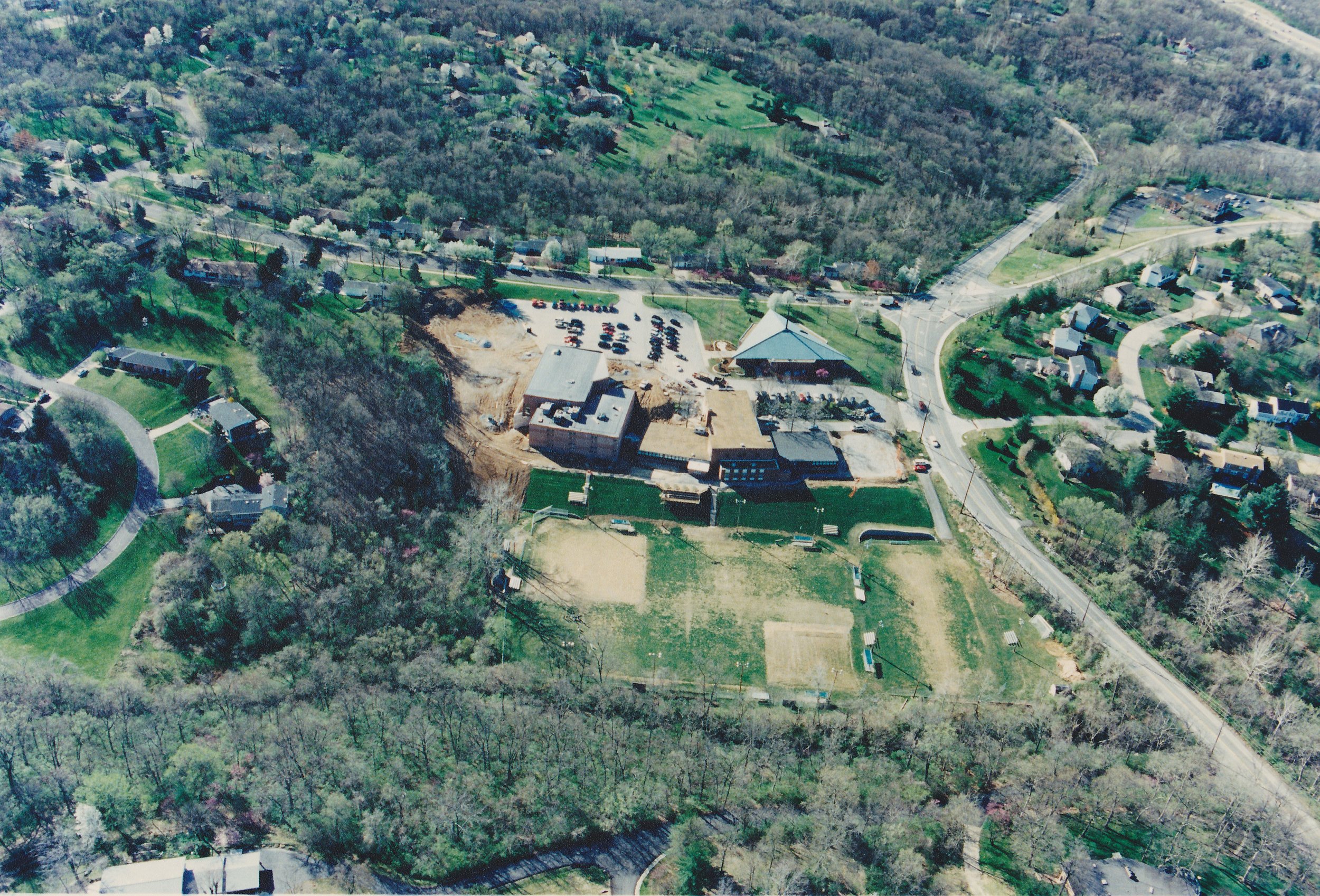
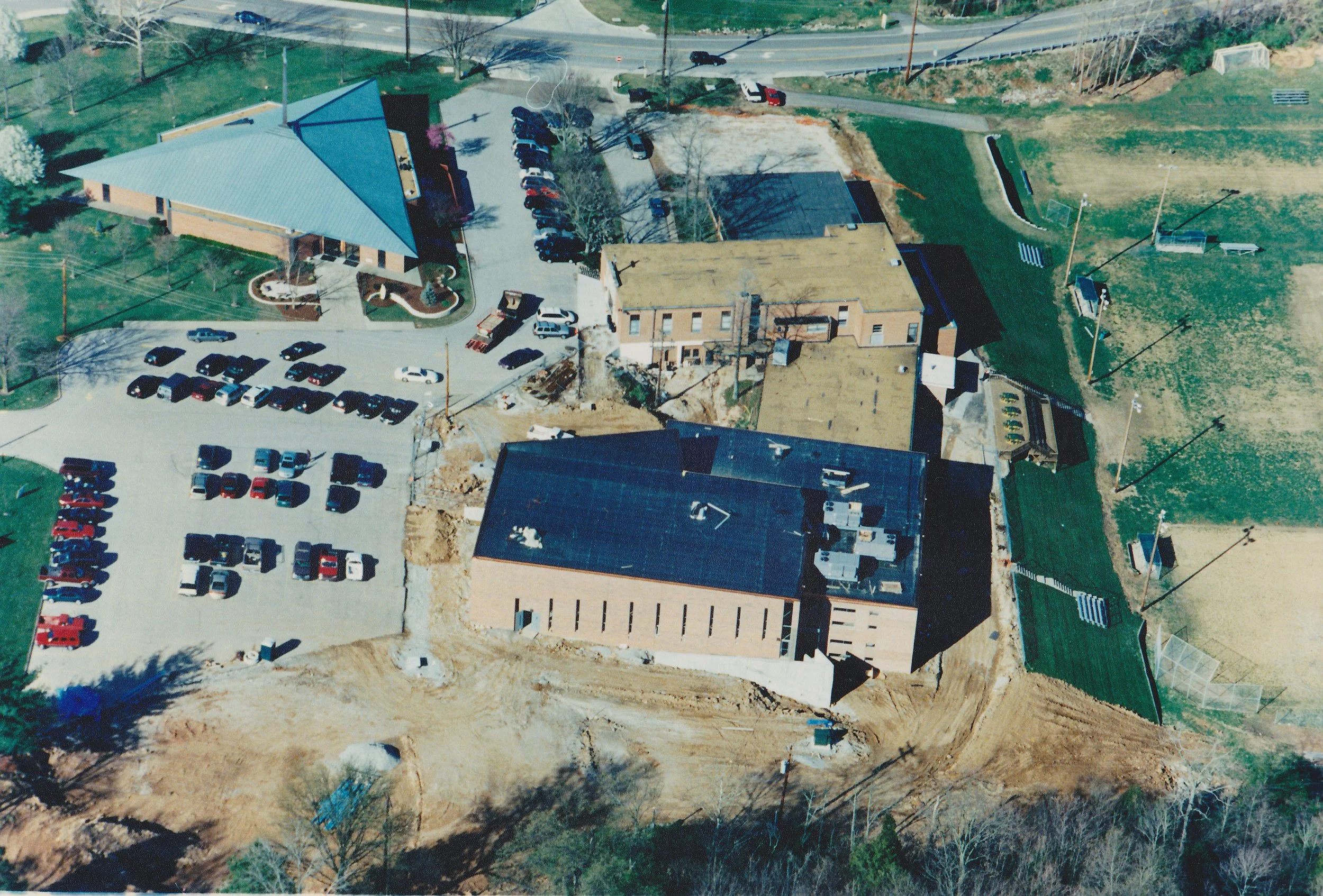
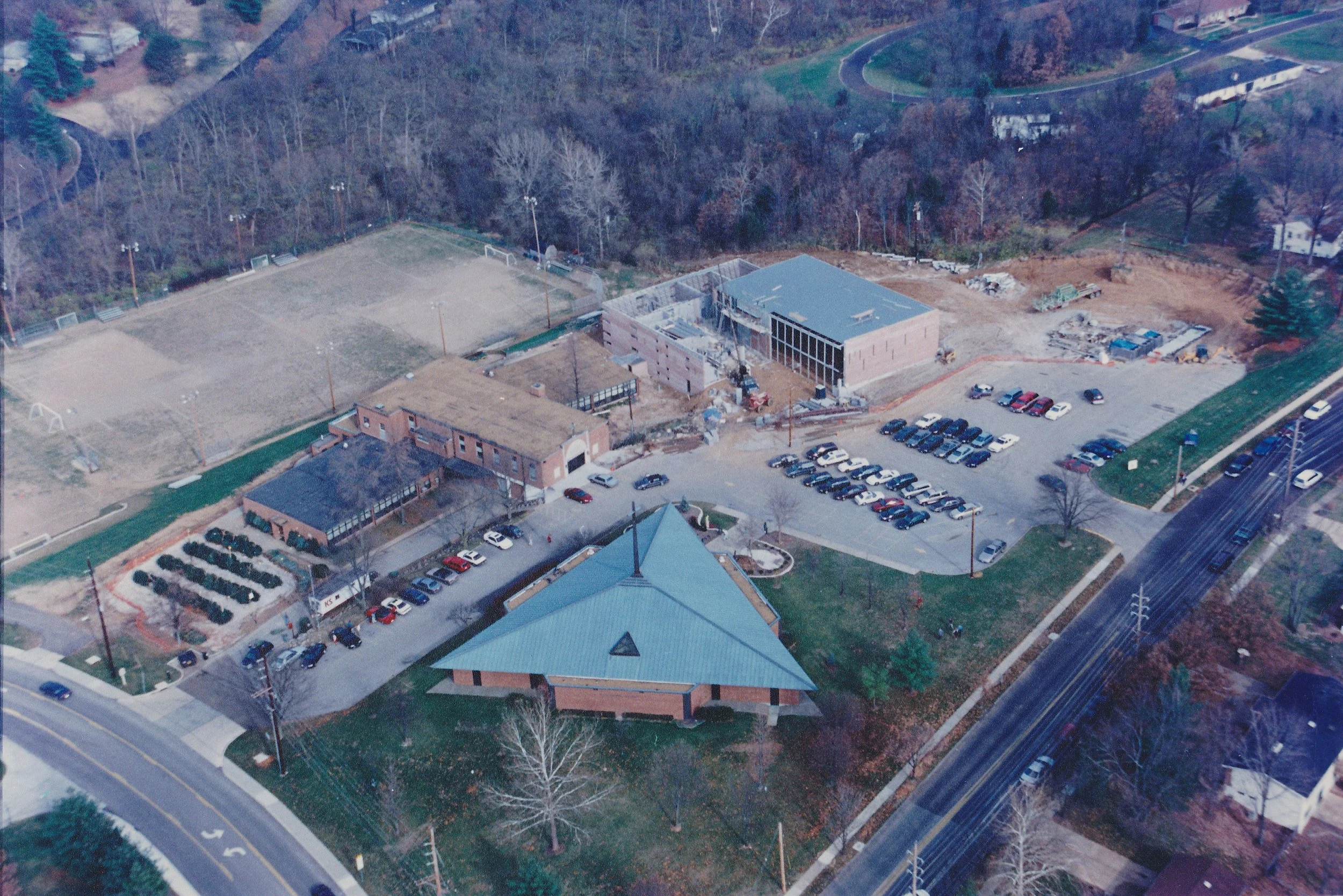
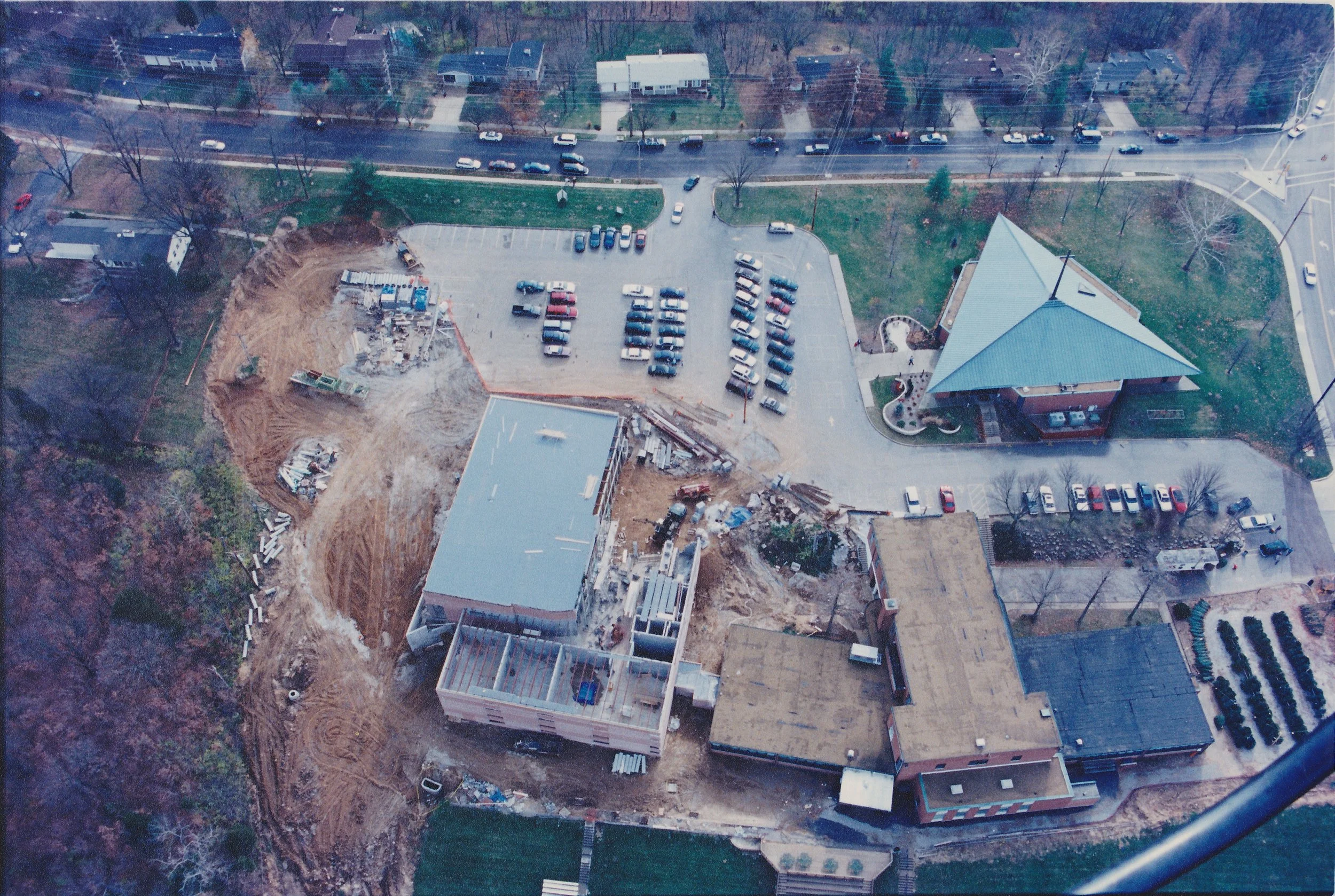
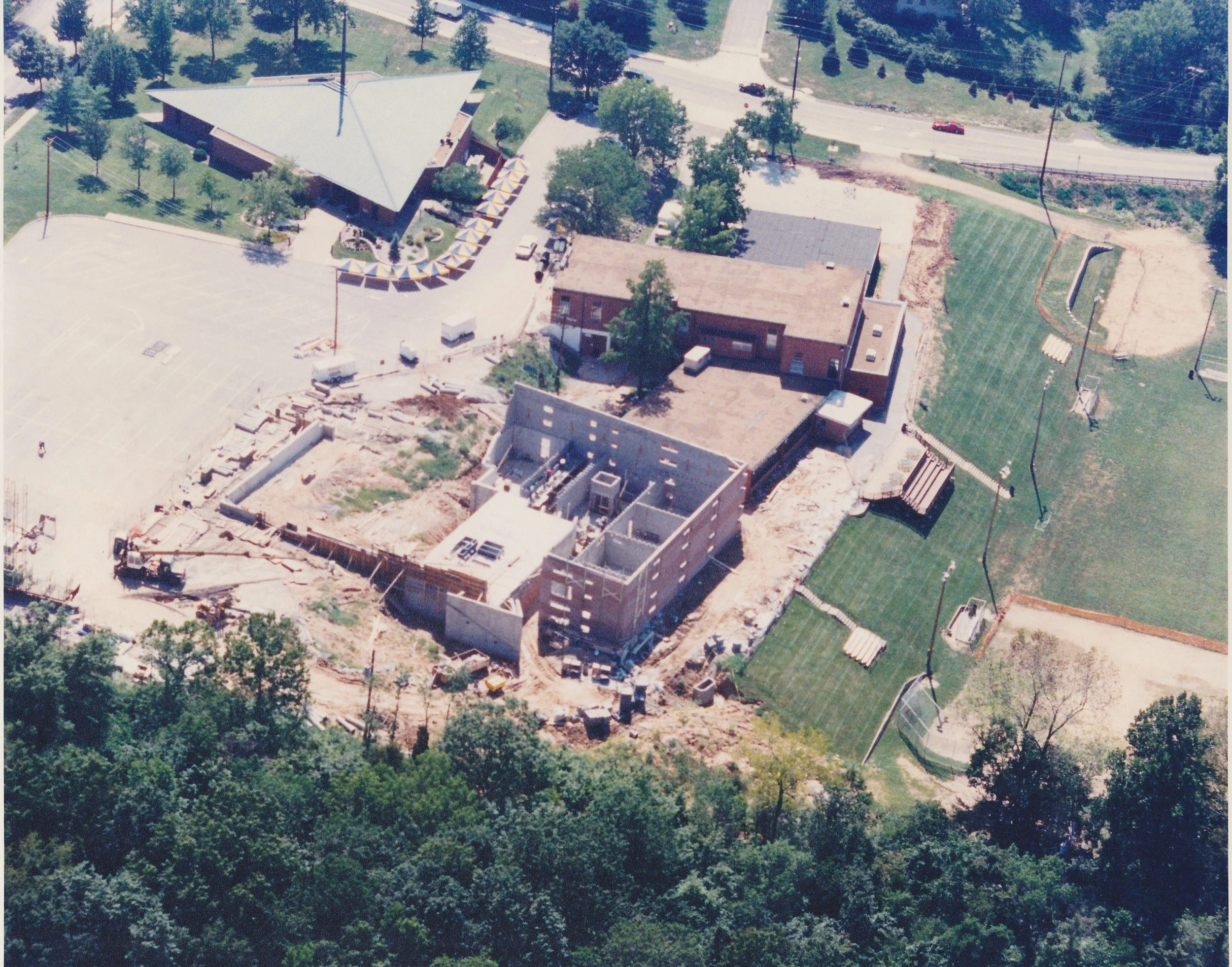
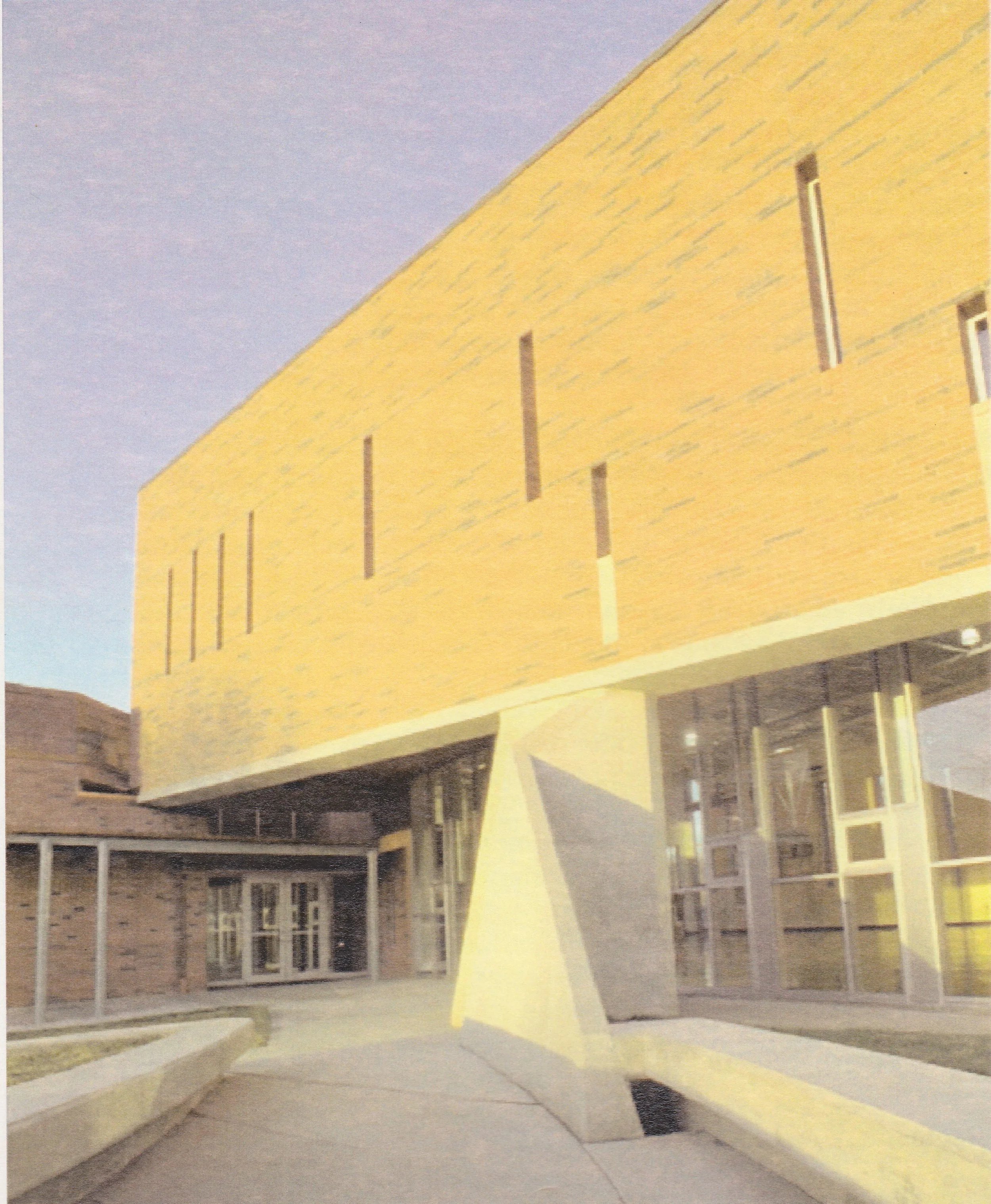
The walls of the new Parish Center Main Hall rise up to create a welcoming porch and a visual connection to the interior life of the church, school and the new buildings. The landscape between completes the connections with the intervening space yielding an outdoor social area with trees, outdoor seating, and an exterior covered walkway.
The main entry is on the upper level, opening into an entry hall that leads into the Main Hall. The Main Hall, lit largely by reflected sunlight, serves as a reception or meeting room, seating as many as 400 people at tables, and as a sports center with full size basketball and volleyball courts. Also on this level are four more rooms - two meeting rooms that can be combined into a single larger meeting room, a state-of-the-art computer room, and the music classroom. The catering kitchen/concession area and restrooms service all the functions on this level.
The lower level adds five rooms - library, science lab, art, and two additional classrooms. There are also restrooms and 3,000 squre feet of storage area.
The new building is completely air-conditioned and fully accessible to any person with a disability. An elevator connects both levels of the new building and provides additional access to the lower level of the original school building. The SGM Parish Center brings 24,000 squre feet of new space for parish activities.
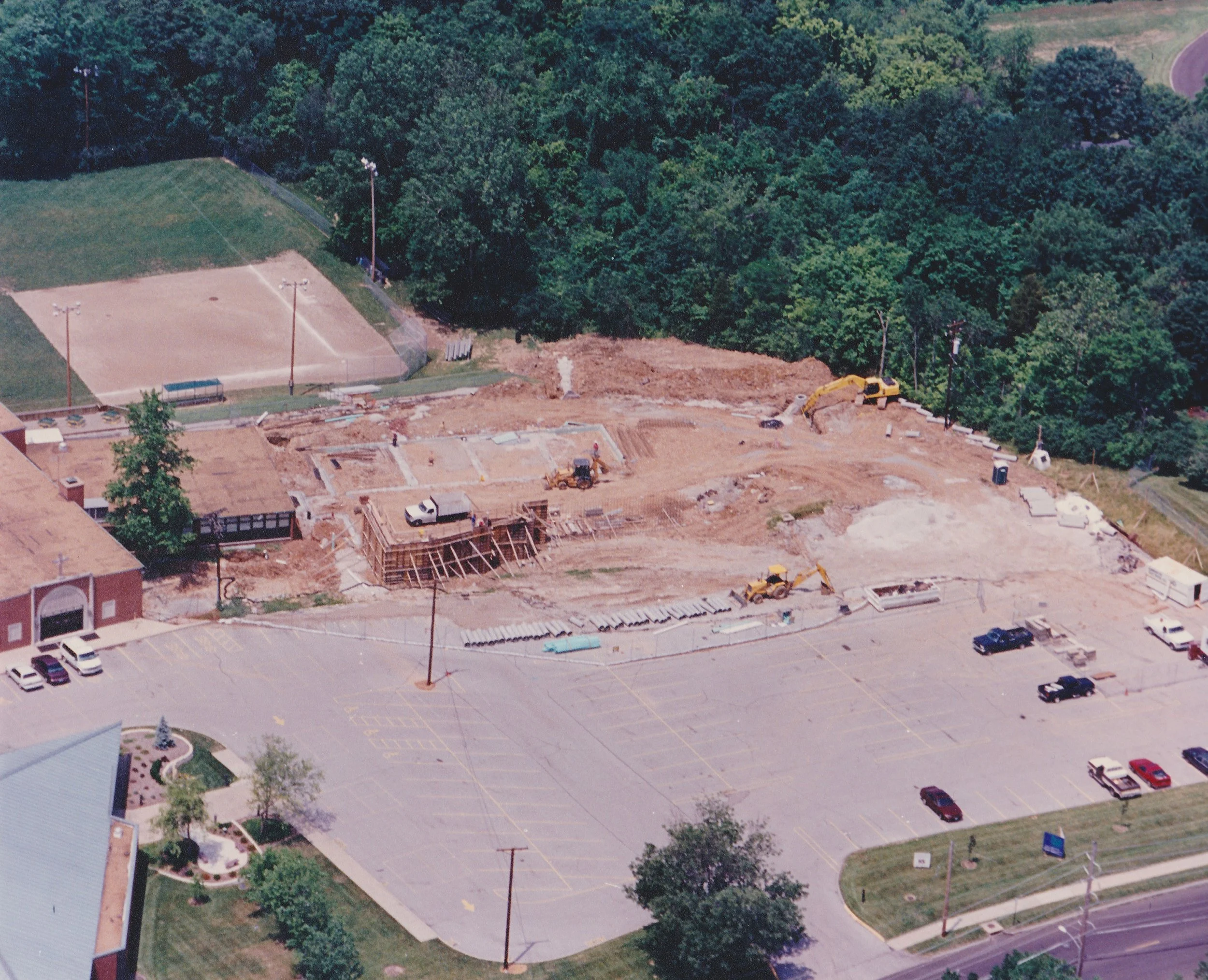
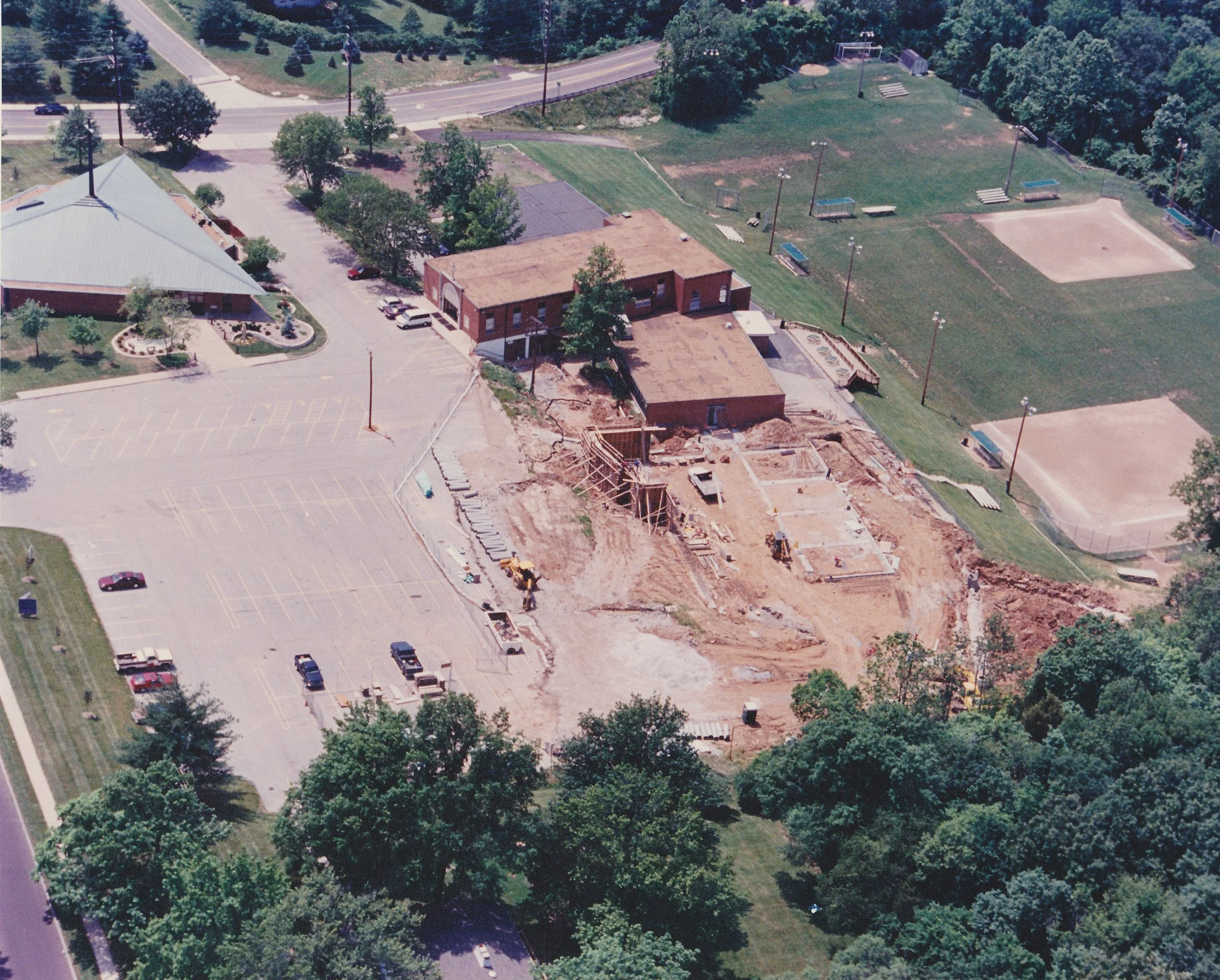
1999 Parish Center Construction Photos
Important Parish Dates
1955
Archdiocese purchases property on the corner of Dougherty Ferry and Ballas for new St. Gerard Majella Parish
Redemptorist provincial accepted new parish, consisting of 250 families. Rev. James Kelly named pastor and took up residene at St. Joseph's Seminary. (now Meramec Community College)
First meetings of the Marian Guild for women and the Majella Club for men of the parish were held.
1956
April groundbreaking for buildings (Photos)
April - August building (Photos)
September Cornorstone Laying (Photos)
December Dedication (Photos)
1957
August 15, Celebration of first Mass.
Arrival of the first I.H.M Sisters (Servants of the Immaculate Heart of Mary, of Monroe, Michigan) to open and staff the new school of 202 pupils
December 15, Dedication of church by Archbishop Joseph E. Ritter (Photos)
1958
February: Priests moved to present rectory.
Inception of the CYC youth group.
1962
Sisters moved into convent in Apple Hill
1966
Formation of the first Parish Council in accordance with Vatican II.
1971
First Director of Religious Education appointed
1976
Parish expansion study by the Parish Council for future development.
1978
Building Development Fund for new church begun under guidance of Rev. James Shea, pastor.
1980
Parish celebrates 25th anniversary.
1981
Groundbreaking ceremonies for the new church. (Photos)
1983
May 14, Dedication of the new church. (Photos)
1996
Groundbreaking for new Parish Center at Summerfest.
1997
Excavation begins for new Parish Center. (Photos)
1999
September 23, SGM Parish Center Opens at FallFest.
SGM School Enrollment - 332 students.
2000
February 20, Dedication of the SGM Parish Center (Photos)
2003
Marian Garden Installation and Dedication (Photos)
Pastors of St. Gerard Majella
Redemptorist Pastors
1955-1961 - Rev. James Kelly
1961-1964 - Rev Edward Comer
1964-1967 - Rev. James Kelly
1967-1971 - Rev. Norman Muckerman
1971-1975 - Rev. John Schaefer
1975-1981 - Rev. James Shea
1981-1986 - Rev. Patrick Grile
1986-1990 - Rev. Richard Boever
Archdiocesan Pastors
1990-1995 - Monsignor John Gaydos
1995-2005 - Rev. Herbert Hauk
2005-2016 - Rev. Thomas Molini
2016-2021 - Rev. David Skillman
2021-Present - Rev. Michael Grosch
Associate Pastors of St. Gerard Majella
Redemptorist Associate Pastors
1858-1959 - Rev. Antholy Kargl
1958-1959 - Rev. Stanley Burke
1959 - Rev. George Ford
1959-1964 - Rev Donald Corrigan
1959-1961 - Rev. Bernard Langton
1961-1964 - Rev. James Higgins
1963-1966 - Rev. John Daly
1964-1966 - Rev. George Thommes
1964-1965 - Rev. Robert McCarthy
1966-1976 - Rev John Hensgen
1966-1971 - Rev. John Schaefer
1968-1972 - Rev. Emmet Crane
1971-1980 - Rev. John Hacker
1972-1980 - Rev. Milton Girse
1982-1984 - Rev. Richard Mevissen
1981-1987; 1988-1990 - Rev. Maurice Zeller
1984-1987 - Rev. George Lieveld
1987-1989 - Rev. Thomas Cosgrove
1987-1988 - Rev. Robert Rietcheck
1989-1990 - Rev. Theodore Lawson
Archdiocesan Associate Pastors
1990-1991 - Rev. Gary Faust
1991-1996 - Rev. Kevin Mahoney
1996-1999 - Rev. Matthew Mitas
1999-2001 - Rev. Frank D'Amico
2001-2002 - Rev. Thomas Schmidt
2002-2002 - Rev. Martin Mulvihill
2002-2013 - Rev. Thomas Bryon
2013-2017 - Rev. Raymond Buehler
2017-2018 - Rev. Gary Vollmer
2018-2021- Rev. Larry Huber
2022-2024 - Rev. Christopher Rubie
2024-2026- Rev. John Seper
2025-Present- Rev. Christopher Smith